The manifesto
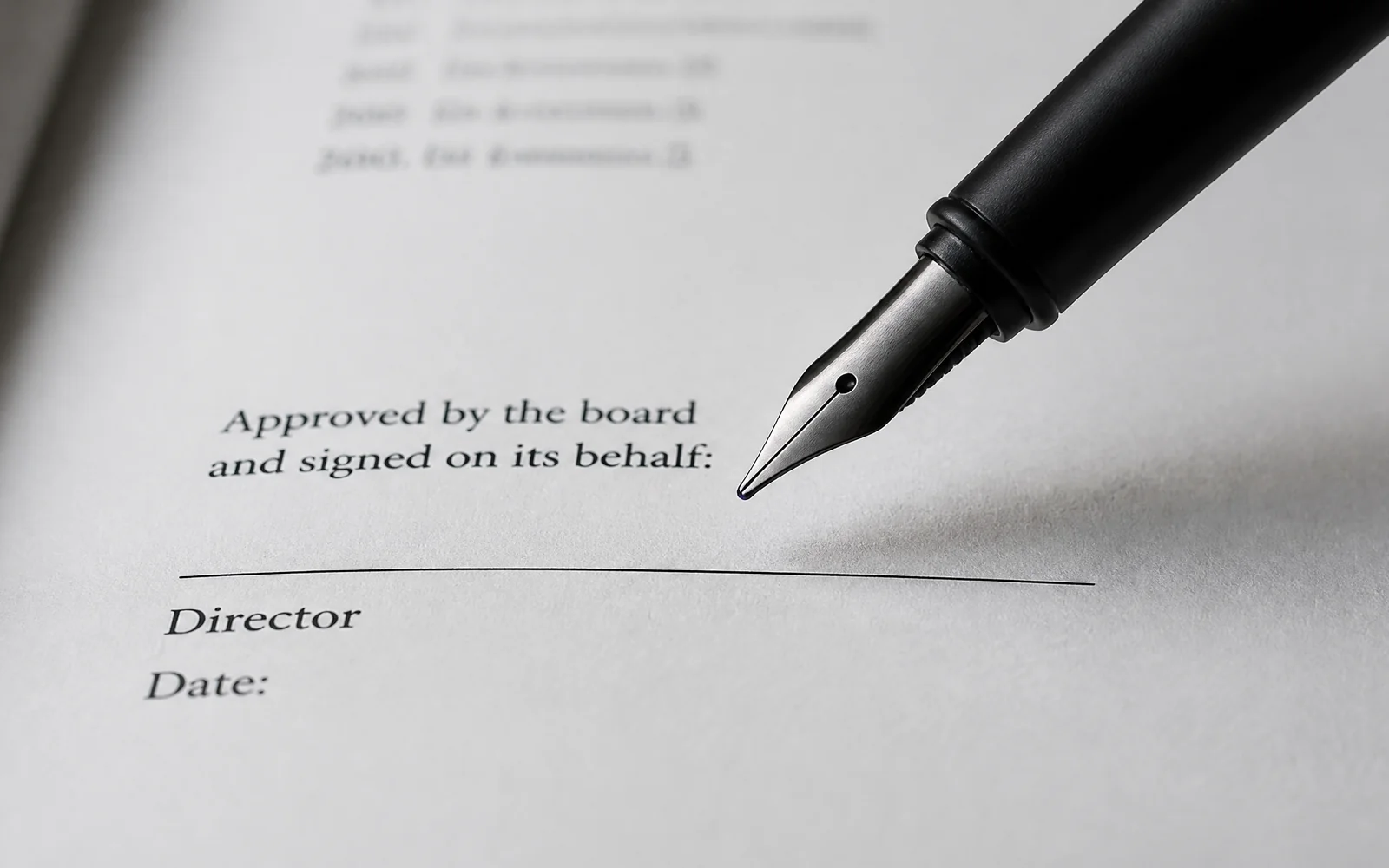
The partner still signs.
AI can surface the evidence. It cannot carry the professional responsibility.
In the autumn of 2015 I stood in a reception room at Number 11 Downing Street and told the Chancellor of the Exchequer that his new dividend tax would not work without real-time digital reporting. I had been invited to talk about the Northern Powerhouse; I stayed to make a nuisance of myself about data. If millions of company owners were about to owe a new tax, HMRC would need to see dividends as they happened, not eighteen months later through a form. The machinery mattered more than the rate. George Osborne raised an eyebrow, which in my experience is as close as a Chancellor comes to conceding the point.
A few months later, in early 2016, I sat at a lunch with a dozen other chartered accountants and listened to Andrew Haldane of the Bank of England set out his estimate that up to 15 million UK jobs were exposed to automation. He described a labour market hollowing out from the middle. I went back to the office and wrote that my firm, my clients and my children should prepare for change at a rapid rate. Some colleagues thought this was excitable. It was 2016.
Then came June 2026 and the KPMG week: a published report with passages the machine had written, claims attributed to people who say they never made them, the whole thing withdrawn after the fact. The profession reacted with a certain quiet satisfaction that it had happened to one of the big names. I watched it with more sympathy than that, because there but for the grace of God go a great many firms. And the important part was widely missed. The AI did exactly what AI does: it produced something that read beautifully, sounded authoritative, and was wrong. The failure was human. It was a failure of process, not of technology.
So this page is not a prediction. I have been inside this argument for a decade, and for the last part of it my answer has been to build rather than to commentate. This is the standard we run, written down.
The Review Gap
For ten years the profession automated preparation. Bank feeds replaced keying, coding learned to suggest itself, draft accounts assembled themselves from ledgers. Preparation got faster every year, and firms competed on how much of it they could do. Review, the conversion of prepared work into signed work, was left almost exactly where it stood in the nineties: one senior human, reading by hand, under time pressure, at the end of the job. That unaddressed half of the profession is the Review Gap, and it is where the trouble lives. Lock-up lives there. Write-offs live there. The difference in quality between your best reviewer and your most tired one lives there. The partner bottleneck is not a diary problem; it is the Review Gap wearing a diary as a disguise.
The Trace-to-Source Standard
Here is how we close it, one number at a time. Take a debtors figure of £142,300 in a draft set of FRS 102 accounts. Every number in a file occupies one of five states, and the whole discipline is knowing which.
CLAIMED is the bottom of the ladder: £142,300 sits in a schedule because somebody or something put it there. It is asserted, nothing more. CITED is a step up: the schedule says “from the sales ledger”, which sounds reassuring and proves nothing, because a citation without a location is a rumour with a suit on. PINNED is where the work starts to mean something: the figure is tied to the sales ledger control account, sheet DR-03, cell F47. You can go there. You can look at it. PROVEN is the state most people imagine when they say “checked”: the schedule casts, the figure agrees to the control account, the aged listing supports it, post-year-end receipts show the money actually arriving, and the treatment holds under FRS 102. And SIGNED is the top: a named, qualified human has read the trail, weighed it and put their name to it.
Four of those states are information. Only the fifth is assurance. A machine can climb a number up the first four faster and more patiently than any trainee I have ever employed, and ours does, around the clock, across every material figure in the file. What it cannot do is take the last step, because the last step is not analysis. It is accountability, and accountability does not transfer to software.
One question
All of this compresses into a single test, and I recommend it to anyone whose accountant, auditor or software vendor has started using the letters A and I in close proximity: can you point to the cell? Ask it of any finding, any adjustment, any confident summary. If the answer is yes, you are looking at evidence. If the answer is a pause, you are looking at a guess with good grammar, and the name on the file is yours, not the software’s. AI is fluent before it is right. The pause is where the fluency runs out.
The apprenticeship
The standard changed how we train as much as how we review. The old apprenticeship taught judgement by accident: years of preparation work slowly taught you what normal looks like, and the ones who survived the grind became reviewers. The machine has taken the grind, so we teach judgement on purpose. Our trainees interrogate findings rather than produce schedules; they defend conclusions at week three instead of year three; they learn to ask the cell question of everything, including us. We didn’t lose anyone to AI. We moved them up to it.
Where this ends
None of this is a hedge against the technology. It is the opposite: the standard is what makes it safe to use the technology at full speed. Firms that refuse the tools will be outpaced by firms that use them. Firms that trust the tools blindly will eventually publish something confident, fluent and wrong under their own name, and some of them will not get the chance to withdraw it before a client has acted on it. The firms that come out ahead will be the ones that were most disciplined about a single, old-fashioned thing: where, exactly, a human still has to sign.
At our firm the answer has not changed since 1948, and it will not change now. The evidence can come from anywhere. The judgement cannot. The partner still signs. Always.
The Partner Still Signs
A weekly briefing on AI, accountancy and professional judgement, from inside a Manchester practice established in 1948. Evidence, not confidence.
The full standard, an operating model and a 90-day implementation plan are free in The Signed Review.